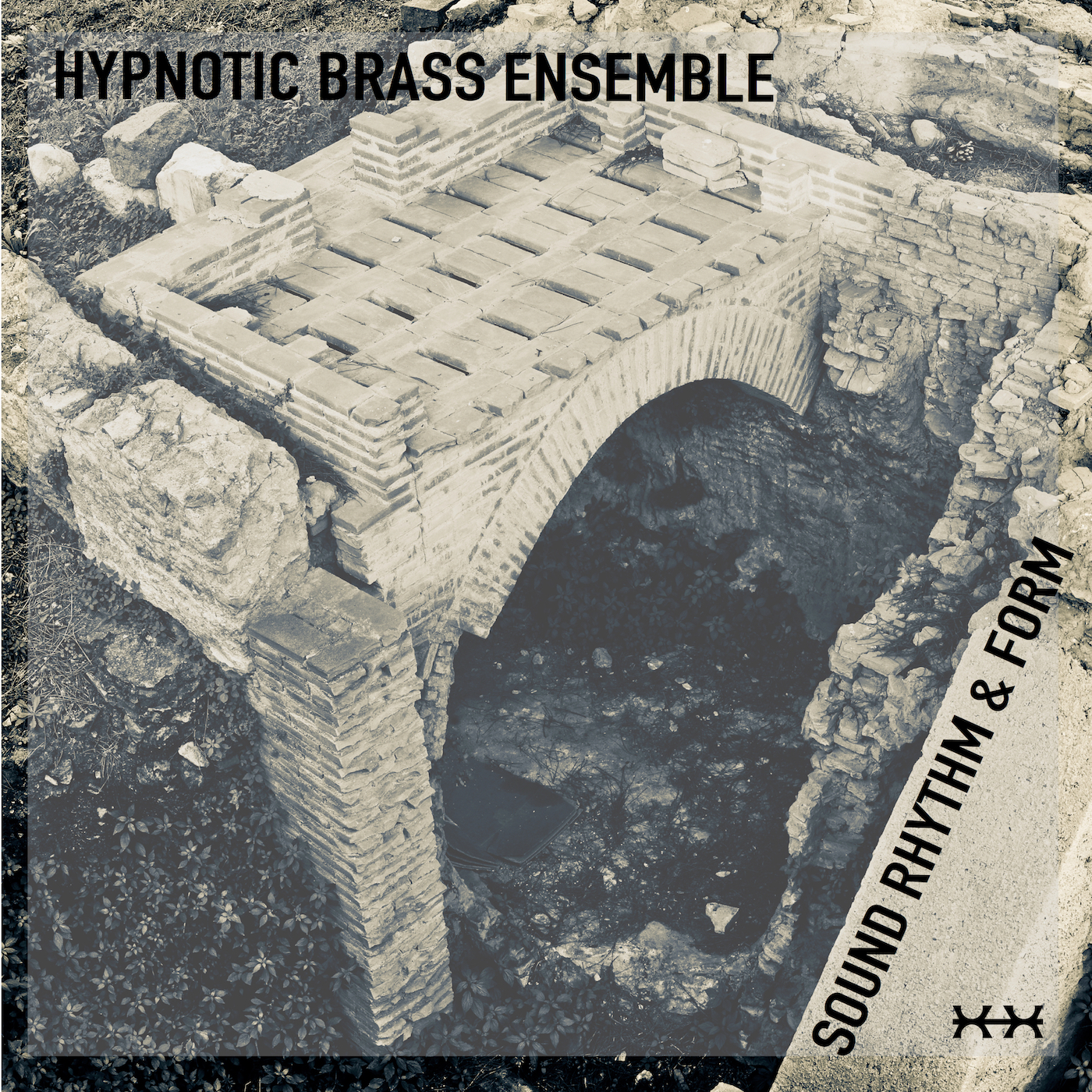
SOUND RHYTHM & FORM
$9.99
Hi, this is Seba Graves (aka Clef).
Sound, Rhythm, and Form began as a practice discipline. The title itself comes from something our father always said: that the three fundamental components of music are sound, rhythm, and form. In 2015 and 2016, while learning to play saxophone, I began writing music as part of my daily practice regimen. I would practice for six, seven, sometimes ten hours a day, and eventually the final portion of those sessions became creative experimentation — writing progressions, loops, melodies, and improvising over them as a way of learning the instrument through creation. Over the course of several months, that process turned into a body of nearly 40 to 50 recordings, some unfinished, some exploratory, and some that eventually became the project we released on March 6, 2016 as Sound, Rhythm, and Form. At the time, members of the group were spread across different cities, making collaboration difficult, so I taught myself to play and record many of the parts alone — including saxophone, trombone, trumpet, euphonium, and other instrumentation throughout the project. The record also represented an intentional move toward jazz influence. Much of Hypnotic Brass Ensemble’s music is aggressive, rhythmic, and heavily driven by funk and hip-hop energy, but this project was an attempt to explore swing, jazz harmony, movement within horn arrangements, and more traditional jazz-inspired phrasing. Tracks like “Diodorus” especially reflect that direction, both harmonically and emotionally. More than anything, Sound, Rhythm, and Form documents a period of learning through repetition, experimentation, and discipline, using practice itself as the doorway into composition.
Beyond its musical direction, Sound, Rhythm & Form functions as a philosophical and historical roadmap exploring the relationship between sound, consciousness, science, spirituality, and cultural memory. Throughout the project, references to figures such as Dr. Gabriel Audu Oyibo, Dr. Frances Cress Welsing, Diodorus Siculus, and concepts like Malkuth, the Levant, and the Nile Valley are used to point toward larger questions surrounding the origins of civilization, the transmission of knowledge, and humanity’s attempt to understand reality itself. The album moves between jazz harmony, improvisation, spiritual symbolism, historical reflection, and theoretical inquiry, using music not simply as entertainment, but as a vehicle for exploration. In many ways, the project asks listeners to reconsider the foundations of philosophy, science, identity, and culture while tracing connections between ancient traditions, modern intellectual thought, and personal artistic expression.